

Key Takeaways
- AI language learning apps offer personalized and adaptive learning experiences.
- They use AI technologies like NLP, speech recognition, and machine learning for real-time feedback.
- Key features include AI chat practice, speech correction, spaced repetition, gamification, and progress tracking.
- Development involves research, design, AI integration, coding, testing, and launch.
- Major challenges include language complexity, real-time processing, data privacy, and user retention.
- Estimated cost ranges from $50,000 to $130,000+ depending on features.
AI is no longer a sideshow in classrooms. It is already how millions of learners study, write, speak, and receive feedback every single day. Global surveys through 2025–2026 show a clear shift: roughly eight in ten students now use AI for schoolwork, with many engaging weekly or even daily. This is not a future trend. It is the baseline your product will meet on day one.
Governments are moving just as quickly. Countries like Kazakhstan have already approved national frameworks for AI in education spanning schools, colleges, and vocational programs. These frameworks set standards for ethics, academic integrity, privacy, and teacher training, backed by concrete implementation roadmaps rather than broad slogans. Many of them draw on guidance from UNESCO, the EU, and the OECD. The message is consistent across regions: use AI, but use it responsibly. Build skills, not shortcuts.
This is the reality for an AI language learning app in 2026. Learners expect instant feedback, meaningful speaking practice, and personalized pacing that fits into busy lives. Increasingly, they also expect multimodal interaction—voice, text, and real-time correction that feels conversational. Institutions expect transparency, strong data protection, and tools that augment teachers rather than replace them.
Deliver both the learner experience and the governance story, and you are not just launching another app. You are building infrastructure for how people will learn to speak, write, and think in new languages in an AI-native world.
What Is an AI-Based Language Learning App?
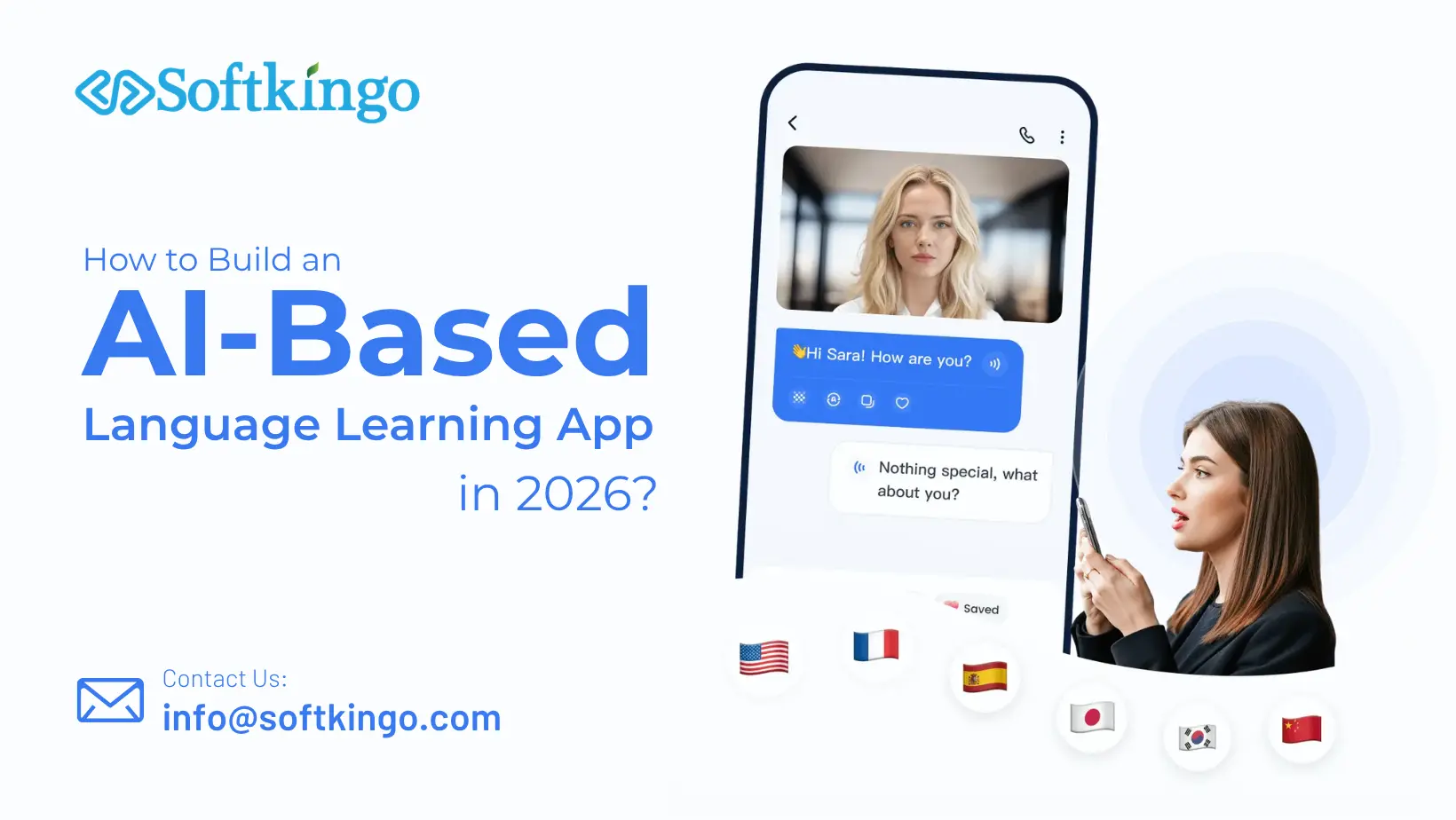
An AI-based language learning app is like having a personal tutor in your pocket—one that actually adjusts to you. Instead of following the same fixed lessons for everyone, it pays attention to how you learn, tracks your progress, and gradually shapes the experience around your needs. The result is practice that feels relevant and engaging, not repetitive or forced.
These apps can do much more than just show you words and translations. They can listen to how you speak, highlight pronunciation mistakes, fix grammar, and even suggest more natural ways to express your thoughts. Behind the scenes, they use technologies like speech recognition and language processing to give feedback instantly. And the more you use the app, the better it gets at understanding where you struggle and where you’re improving.
What really sets AI-powered apps apart is how they mimic real-life conversations. Instead of just memorizing vocabulary, you might practice ordering food in Spanish, making small talk in French, or preparing for a business meeting in English. This kind of interactive learning helps you build confidence—not just knowledge—so you can actually use the language in everyday situations.
Another big advantage is flexibility. You can learn whenever it suits you—at home, during a commute, or in between tasks. Your progress is saved automatically, so you can pick up right where you left off without any friction. Over time, the app becomes more than just a tool. It acts as a teacher, a conversation partner, and a guide—all in one place.
Key Features of a Successful AI Language Learning App
1. Personalized Onboarding
The first few minutes inside a language learning app matter more than most people think. That’s when a learner decides whether to stay or leave. A good onboarding experience asks the right questions—your goals, current level, and how much time you can realistically commit—and then builds a path that actually fits you.
Some apps even include a quick diagnostic test to find your starting point. Instead of feeling lost or overwhelmed, you feel like the app “gets you” right away. That early sense of direction can make all the difference.
2. Smart Lesson Modules
Modern language apps go far beyond simple flashcards. The best ones combine text, audio, and visuals so you can learn in different ways at the same time. This mix keeps things interesting and helps concepts stick better.
When lessons feel interactive and varied, they stop feeling like chores. Instead, it feels more like guided practice—something you actually want to come back to.
3. Real-Time Speech Recognition
Speaking is often the most intimidating part of learning a new language. AI-powered speech recognition changes that by giving instant feedback on how you pronounce words, down to small details like stress and pacing.
Instead of waiting for a teacher to correct you, you can adjust on the spot. That immediate feedback loop helps build confidence much faster and makes speaking practice feel more natural.
4. Grammar Feedback That Teaches
Good grammar correction isn’t just about marking something wrong—it’s about explaining why. With the help of natural language processing, modern apps can give context-aware suggestions that actually help you learn.
Over time, this kind of feedback builds a deeper understanding of how sentences work, rather than just encouraging guesswork or memorization.
5. Adaptive Learning Paths
No two learners move at the same pace, and a strong app reflects that. Adaptive learning paths adjust difficulty based on how you’re performing.
If you’re struggling, the app slows down and reinforces key concepts. If you’re doing well, it pushes you forward. This keeps you challenged without feeling overwhelmed—much like a good human tutor would.
6. Spaced Repetition
Learning vocabulary isn’t just about repetition—it’s about timing. Spaced repetition systems bring words back just as you’re about to forget them, helping move them into long-term memory.
This approach makes learning more efficient. Instead of cramming, you build a vocabulary that actually sticks.
7. Real Conversation Practice with AI
One of the biggest advantages of AI is the ability to practice conversations anytime. You can simulate real-life situations—ordering food, chatting casually, or preparing for an interview—without needing a human partner.
These interactions feel dynamic and responsive, and the app can correct your grammar, tone, and phrasing along the way. It’s like having a conversation partner available 24/7.
8. Gamification That Actually Motivates
Features like streaks, points, and achievements can be powerful—but only if they feel meaningful. The best apps connect these rewards to real progress, not just surface-level engagement.
When done right, gamification helps build consistency, and consistency is what really drives language learning.
9. Clear Progress Tracking
People stay motivated when they can see improvement. A well-designed progress dashboard shows how far you’ve come, where you’re struggling, and what to focus on next.
This sense of progress keeps learners engaged and gives them a reason to keep going, even when things get challenging.
10. Offline Access and Seamless Sync
Flexibility is key. Being able to download lessons and continue learning without an internet connection makes a huge difference—especially for busy schedules.
When progress syncs smoothly across devices, you can switch from phone to laptop without missing a beat. That convenience helps turn occasional practice into a daily habit.
Key Benefits of AI Language Learning App Development
Building an AI language learning app isn’t just about launching another digital product. It’s about creating a smarter, more responsive way for people to learn—one that aligns with what modern users actually want: flexibility, personalization, and real results.
For founders, investors, and educators, this space offers both strong business potential and the chance to genuinely improve how people learn languages. Many teams also work with AI consultants to shape their product strategy and figure out how to integrate intelligent features in a way that truly adds value.
Here are the key benefits that make AI-powered language learning apps so effective:
1. Personalized Learning Journeys
Traditional courses tend to follow a one-size-fits-all approach, but AI changes that completely. With adaptive learning paths, the app can detect where a learner is struggling and adjust content in real time.
This means a beginner and an advanced learner can use the same platform and still have very different experiences. The result is a learning journey that feels tailored, which helps build confidence and keeps users moving forward.
2. Higher Retention and Engagement
One of the biggest challenges in language learning is consistency. Many people start strong but lose motivation along the way.
AI-powered apps tackle this by making learning more interactive and rewarding. Features like instant feedback, conversational practice, and thoughtful gamification make the experience feel less like studying and more like active participation. When learning feels engaging, people are far more likely to stick with it.
3. Global Reach
Unlike physical classrooms, an AI language app isn’t limited by geography. It can serve learners from different countries, backgrounds, and time zones—all at once.
With support for multiple languages, the same platform can help someone in Europe learn Mandarin while a learner in Asia practices Spanish. This global accessibility makes it easier to scale and tap into a much wider audience.
4. Strong and Recurring Revenue Models
From a business standpoint, AI language apps offer flexible monetization options. Subscription plans, premium features, and in-app purchases can create steady, predictable revenue.
Instead of relying on one-time course sales, companies can build long-term relationships with users while continuously improving the product. This makes the business model both sustainable and scalable.
5. Easy Scalability
Once the core system is built, expanding the app becomes much more manageable. New languages, advanced levels, or specialized learning tracks can be added without starting from scratch.
This ability to grow over time is one of the biggest advantages of AI-driven platforms, especially for teams thinking long term.
6. Valuable Data Insights
Every interaction within the app generates useful data—how users learn, where they struggle, and what keeps them engaged.
These insights can be used to improve lessons, refine features, and guide future product decisions. Over time, this data becomes a powerful advantage, helping businesses build better and more effective learning experiences.
7. 24/7 Learning Access
Unlike human tutors, an AI-powered app is always available. Learners can practice whenever it fits into their schedule—early morning, late at night, or during short breaks in the day.
This flexibility makes language learning more accessible and easier to maintain as a daily habit, which is key to long-term success.
How AI Language Learning Apps Work?
An AI language learning app may seem simple when you use it, but behind each lesson, correction, and conversation, there is a powerful combination of technologies working together. These systems are designed to make learning feel smooth, interactive, and tailored to each individual. What makes these apps truly effective is their ability to adapt—constantly learning from user behavior and improving the experience over time.
At the core, machine learning plays a major role. It helps the app understand how a learner is progressing, where they are struggling, and what kind of support they need next. Instead of offering the same path to everyone, the app evolves with the user, making each learning journey feel more personal and efficient.
Let’s take a closer look at the key technologies that power these apps:
1. Natural Language Processing (NLP)
Natural Language Processing enables the app to understand and interpret written language. When a learner types a sentence, the app doesn’t just check if it’s right or wrong—it analyzes the structure, identifies grammar issues, and offers meaningful corrections.
More importantly, it explains those corrections in a way that helps the learner improve. This turns every mistake into a learning opportunity, helping users gradually build a stronger grasp of sentence formation and language rules.
2. Large Language Models (LLMs)
Large Language Models are what make in-app conversations feel natural and engaging. They allow learners to interact with the app in a way that feels closer to speaking with a real person.
Users can discuss everyday topics, ask questions, or practice specific scenarios, and the app responds with human-like fluency. Thanks to continuous advancements, these models can now generate realistic and context-aware dialogues, making practice sessions far more immersive than traditional methods.
3. Speech Recognition
Speech recognition technology focuses on improving how learners speak. It listens to spoken input, converts it into text, and evaluates pronunciation in detail.
The app can identify whether a learner is struggling with certain sounds, syllables, or tones and provide instant feedback. This immediate response allows users to correct themselves on the spot, making speaking practice more effective and less intimidating.
4. Machine Learning
Machine learning is the engine that drives personalization. It tracks user performance over time and identifies patterns in learning behavior.
For example, if a learner consistently struggles with a specific type of grammar or vocabulary, the app adjusts by offering more targeted practice. On the other hand, if the learner is progressing quickly, the app increases the difficulty level. This dynamic adjustment ensures that users stay challenged without feeling overwhelmed.
5. Spaced Repetition Engines
Spaced repetition is a scientifically proven method for improving memory. These engines schedule vocabulary reviews based on when a learner is most likely to forget a word.
Instead of repeating everything equally, the app focuses on timing, bringing back words just when they need reinforcement. This approach helps move information from short-term memory into long-term retention, making learning more efficient and lasting.
6. Text-to-Speech (TTS)
Text-to-Speech technology allows the app to produce clear and accurate audio for words and sentences. Learners can hear proper pronunciation, including accent, tone, and rhythm.
This is especially helpful for those who are trying to develop a natural speaking style. By listening and repeating, users can better understand how the language sounds in real-life conversations.
7. Recommendation Systems
Recommendation systems guide learners through their journey. Based on performance and activity, the app suggests what to do next—whether it’s moving forward to a new lesson, revisiting a weak area, or practicing a specific skill.
This creates a structured experience without making it feel rigid. Learners always know what step to take next, while still having the flexibility to explore.
Steps To Build An AI Language Learning App
Building an AI language learning app is not just a technical project—it is a mix of understanding people, designing learning experiences, and carefully using AI to make the process more personal and effective. A good app is never built in one go. It evolves step by step, from an idea on paper to a product that learners use every day.
Here’s how the process usually comes together:
1. Market Research And Planning
Everything starts with understanding the learner. Who are you building for—students, professionals, travelers, or beginners learning for fun? What languages are they trying to learn, and what problems do they currently face with existing apps?
This stage is all about listening and observing. By studying user behavior and competitor apps, you can clearly see what’s missing in the market. That clarity becomes the foundation of your entire product.
2. Designing The User Experience And Interface
Once you know what you’re building, the next step is shaping how it feels to use it. A language learning app should feel simple, smooth, and welcoming—not overwhelming.
Good design helps users move through lessons naturally without confusion. Clear buttons, clean layouts, and a friendly learning flow make a big difference. When the experience feels effortless, learners are more likely to stay consistent.
3. AI Integration And Algorithm Development
This is where the app starts becoming “smart.” AI features like grammar correction, speech recognition, and personalized learning paths are added here.
The goal is to make the app respond to each learner differently. Instead of giving the same lessons to everyone, AI helps adjust difficulty, correct mistakes, and guide users based on their progress.
4. Content Creation And Course Development
Even with powerful AI, content is still the heart of the app. Lessons need to be clear, practical, and relevant to real-life situations.
This includes vocabulary, dialogues, exercises, and cultural context. AI can help speed things up, but human input ensures the content is accurate and actually useful for learners.
5. Mobile App Development
Now everything is turned into a working product. Developers build the app so it runs smoothly on both Android and iOS devices.
This stage focuses on performance, speed, and stability. Features like offline access, smooth navigation, and fast loading times are important because they directly affect how often people use the app.
6. Testing And Quality Assurance
Before launch, the app goes through careful testing. Every feature is checked to make sure it works properly and delivers a good experience.
For AI-powered apps, this also means testing how accurate the feedback is—whether speech recognition is correct, whether grammar suggestions make sense, and whether recommendations feel helpful.
7. Launch And Marketing
Launching the app is not just about putting it on the app store. It is about making sure people actually find it and try it.
This usually involves marketing campaigns, social media promotion, and app store optimization. The early users are especially important because their feedback helps shape future improvements.
8. Post-Launch Support And Updates
After launch, the work continues. In fact, this is where the app really grows.
Regular updates, bug fixes, and new features keep the experience fresh. Listening to user feedback is important because it helps improve both the learning experience and the technology behind it.
Challenges in Building an AI Language Learning App
Building an AI-powered language learning app is an exciting idea, but in reality, it comes with several practical challenges. The technology is powerful, but it is not perfect, and making everything work smoothly for real users takes careful planning, testing, and constant improvement. Understanding these challenges early can save a lot of time, effort, and cost during development.
Handling Multiple Languages And Dialects
One of the biggest challenges is supporting multiple languages in a meaningful way. Every language comes with its own grammar rules, sentence structures, idioms, and cultural context. On top of that, regional accents and dialects add another layer of complexity.
An app that works well for standard English might struggle with different variations or pronunciations. To handle this properly, developers need strong multilingual NLP models and careful tuning for each language so that learners don’t get confused or receive incorrect feedback.
Real-Time Speech Processing
Many learners expect instant feedback when they speak. They want to know right away if their pronunciation is correct or if they made a mistake.
However, real-time speech processing is technically challenging. The system must listen, interpret, and respond within seconds while maintaining accuracy. This becomes even harder in real-world conditions like background noise, unclear pronunciation, or varying speaking speeds. Keeping the experience smooth and reliable is a constant technical challenge.
Scaling High-Quality Content
While AI can help generate content, it still cannot fully replace human expertise. High-quality language learning requires accurate grammar explanations, meaningful examples, and culturally appropriate context.
Creating this kind of content at scale takes time and effort, often involving language experts and native speakers. Without this human layer, even the most advanced app can feel shallow or unreliable to learners.
Balancing Personalization Without Overload
Personalization is one of AI’s biggest strengths, but too much of it can backfire. If the app keeps changing lessons too frequently or pushes constant suggestions, users may feel overwhelmed instead of supported.
The real challenge is subtlety—letting the AI adapt quietly in the background while keeping the learning experience simple, stable, and easy to follow.
Privacy And Data Protection
AI language learning apps collect sensitive data such as voice recordings, written input, and learning behavior. Protecting this information is extremely important.
Regulations like GDPR and COPPA require strict compliance, especially when dealing with younger users. Security cannot be treated as an afterthought—it needs to be built into the system from the very beginning to ensure trust and safety.
Managing Costs Of AI Integration
Advanced AI features like speech recognition, NLP processing, and real-time conversation systems require significant computing resources.
For startups, this can quickly become expensive. The challenge is finding the right balance between using third-party APIs and building in-house systems so that performance stays strong without making the product financially unsustainable.
Maintaining Learner Engagement Over Time
Getting users to try the app is only the first step. The real challenge is keeping them engaged over weeks and months.
Without strong motivation systems—like gamification, progress tracking, and interactive conversations—users may lose interest quickly. In language learning, consistency is everything, so engagement design becomes just as important as the technology behind the app.
Cost Of Building An AI Language Learning App
The cost of building an AI-powered language learning app depends heavily on the features, design quality, and overall scale of the product. A simple app with basic lessons and quizzes will naturally cost much less than a full platform with AI chat, speech recognition, and personalized learning paths.
On average, development costs typically range from $40,000 to $130,000+.
This includes everything from product planning, UI/UX design, backend development, and AI integration to testing and deployment. More advanced features like real-time speech recognition, adaptive learning systems, and AI-driven personalization significantly increase both development complexity and overall cost.
| Service Type | Estimated Cost ($) |
|---|---|
| Market research and planning | $1,000—$9,000 |
| Design (UI/UX) | $5,000—$10,000 |
| Backend development | $7,000—$20,000 |
| Frontend development | $6,000—$15,000 |
| Speech recognition integration | $4,000—$12,000 |
| AI tools integration | $5,000—$15,000 |
| Content creation | $6,000—$15,000+ |
| Testing | $3,000—$8,000 |
| Deployment | $1,000—$4,000 |
| Project management | $2,000—$8,000 |
| Marketing | $5,000—$15,000 |
| Ongoing maintenance and updates | $2,000—$7,000 per year |
| Total cost | $40,000—$140,000+ |
Partner With Softkingo To Develop Your AI Language Learning App
Building an AI-powered language learning app is not just about writing code—it’s about combining the right technology, thoughtful design, and a clear understanding of how people actually learn. From personalization to real-time feedback, every detail matters if you want to create an app that users truly stick with.
That’s where having the right development partner makes a difference.
At Softkingo, we work closely with founders, startups, and businesses to turn ideas into scalable AI-powered products. As an experienced AI development company, we help you move from concept to launch with a structured approach that covers everything—from early-stage planning and UX design to AI integration and post-launch optimization.
Our focus is on building learning experiences that feel natural and engaging. That means features like personalized learning paths, conversational AI, speech recognition, and adaptive feedback systems that evolve with the learner over time.
If you’re planning to launch an AI language learning app in 2025, the right foundation is everything. With the right team, you can build a platform that not only supports learners globally but also grows and adapts as your user base expands.
FAQ
Was this article helpful?
Current mood: Okay

About the Author
Paramhans Singh
Paramhans Singh, CEO & Founder of Softkingo, drives innovation, inspires tech talent, and leads the creation of high-quality IT solutions that deliver impact worldwide.