

Key Takeaways
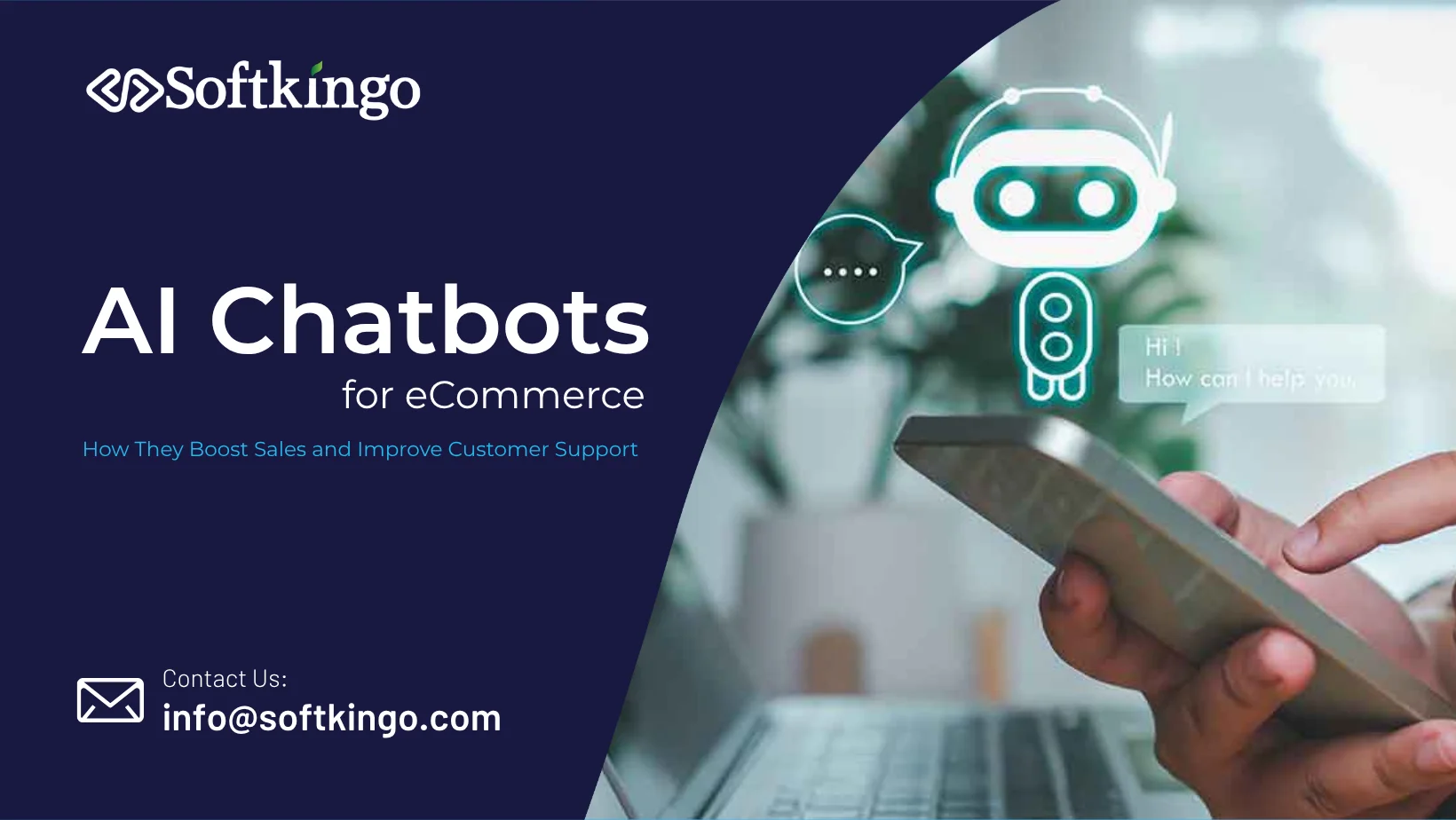
- eCommerce chatbots are AI-powered tools that enhance customer experience through real-time, automated interactions.
- There are three main types: AI-powered, rule-based, and hybrid chatbots, each suited for different business needs.
- Chatbots enable 24/7 customer support, ensuring instant assistance and improved customer satisfaction.
- They help reduce operational costs by automating repetitive queries and minimizing dependency on large support teams.
eCommerce chatbots have become essential for modern online stores and enterprises, significantly enhancing customer experience while driving measurable business growth. These intelligent virtual assistants provide real-time, personalized support, helping brands improve user engagement, boost retention, and streamline operations.
According to industry insights, 64% of consumers consider 24/7 availability the most valuable benefit of chatbots. In the eCommerce space, chatbots are widely used to handle repetitive tasks such as order tracking, answering frequently asked questions, and offering product recommendations. This allows human agents to focus on more complex customer needs.
The result is faster response times, improved efficiency, and higher customer satisfaction. Beyond support, chatbots also play a vital role in sales and marketing, with nearly half of consumers open to receiving product suggestions through automated assistants.
By delivering seamless and convenient interactions, AI-powered eCommerce chatbots foster stronger customer relationships—73% of users are more likely to engage with brands that use chatbot technology.
What Are eCommerce Chatbots?
eCommerce chatbots are AI-powered virtual assistants designed to facilitate communication between online retailers and their customers. They serve as a bridge that simplifies the buying journey while enhancing the overall shopping experience.
At their core, chatbots are software programs built to simulate real-time conversations with users through text or voice. Using technologies such as Artificial Intelligence (AI), Natural Language Processing (NLP), and pattern recognition, they understand customer queries and respond in a natural, conversational manner.
These chatbots can:
- Answer customer questions
- Provide instant support
- Recommend products
- Collect feedback
- Monitor user engagement
Over time, AI chatbots continuously improve by learning from past interactions, enabling them to handle more complex queries and deliver smarter responses.
Types of eCommerce Chatbots
In the evolving landscape of online retail, chatbots are no longer one-size-fits-all solutions. Depending on business requirements, customer expectations, and the level of automation needed, eCommerce businesses can choose from three primary types of chatbot solutions.
AI-Powered Chatbots
AI-powered chatbots represent the most advanced form of conversational technology. These bots utilize Artificial Intelligence (AI) and Natural Language Processing (NLP) to understand, interpret, and respond to customer queries in a way that closely resembles human conversation.
Unlike basic bots, AI chatbots don’t rely solely on predefined scripts. Instead, they learn continuously from user interactions, enabling them to improve over time. They can understand context, detect intent, and even handle complex or multi-step queries.
For example, if a customer asks, “I’m looking for something casual for summer,” an AI chatbot can analyze preferences, browsing history, and trends to recommend suitable products. This makes interactions feel more natural, personalized, and engaging.
These chatbots are ideal for businesses aiming to deliver premium customer experiences, automate advanced support, and drive intelligent product recommendations.
Rule-Based Chatbots
Rule-based chatbots, often referred to as decision-tree bots, operate on predefined rules and scripts. They follow a structured flow, where responses are triggered based on specific keywords or user selections.
For instance, when a user clicks on options like “Track Order” or “Return Policy,” the bot responds with pre-programmed answers. These bots are straightforward, reliable, and easy to implement.
While they lack the flexibility of AI-driven bots, rule-based chatbots are highly effective for handling repetitive queries and guiding users through simple processes. They are especially useful for small to mid-sized eCommerce businesses that want quick deployment without heavy investment in AI.
However, their limitation lies in handling unexpected queries. If a user asks something outside the predefined flow, the bot may fail to provide a meaningful response.
Hybrid Chatbots
Hybrid chatbots combine the strengths of both AI-powered and rule-based systems. They use rule-based logic for structured interactions while leveraging AI capabilities for more dynamic and complex conversations.
This combination offers the best of both worlds—efficiency and intelligence. For example, a hybrid chatbot can guide users through a predefined checkout process while also answering personalized product-related questions using AI.
Hybrid bots are particularly effective for growing eCommerce businesses that need scalability, flexibility, and a balance between automation and human-like interaction.
Omnichannel Integration
Modern eCommerce chatbots are not limited to websites alone. Businesses are increasingly integrating chatbots across multiple platforms such as WhatsApp, Instagram, Facebook Messenger, and Google Business Messenger.
This omnichannel presence ensures customers can interact with your brand on their preferred platforms without any disruption. Whether a user starts a conversation on Instagram and continues it on WhatsApp, the experience remains seamless and consistent.
Key Benefits of Chatbots for eCommerce Businesses
24/7 Customer Support
One of the most significant advantages of chatbots is their ability to provide round-the-clock assistance. Unlike human agents, chatbots are always available, ensuring that customers can get help anytime—whether it’s late at night, during weekends, or on holidays.
This constant availability not only improves customer satisfaction but also builds trust, as users know they can rely on your business whenever needed.
Cost Efficiency
Managing a large customer support team can be expensive and resource-intensive. Chatbots help reduce operational costs by automating repetitive and time-consuming tasks.
They can handle thousands of customer interactions simultaneously without requiring salaries, training, or breaks. This allows businesses to optimize resources and allocate human agents to more critical and complex issues.
Personalized Shopping Experience
Personalization has become a key driver of eCommerce success. Chatbots analyze customer data such as browsing behavior, purchase history, and preferences to deliver tailored recommendations.
Instead of showing generic product listings, chatbots guide users toward items that match their interests. This not only enhances the shopping experience but also increases the likelihood of conversions.
Data Collection & Insights
Every interaction with a chatbot generates valuable data. From customer preferences to common pain points, this information helps businesses gain deeper insights into user behavior.
These insights can be used to improve marketing strategies, refine product offerings, and make informed business decisions. In many ways, chatbots act as a continuous feedback mechanism for your eCommerce store.
Reduced Cart Abandonment
Cart abandonment is a major challenge for online retailers. Chatbots help tackle this issue by re-engaging customers who leave items in their carts.
They can send timely reminders, offer discounts, or address concerns that may have prevented the purchase. This proactive approach significantly improves conversion rates and reduces lost sales opportunities.
Cross-Selling & Upselling
Chatbots are highly effective in increasing average order value through smart product suggestions. During conversations, they can recommend complementary or upgraded products based on user intent.
For example, if a customer is buying a smartphone, the chatbot can suggest accessories like cases or earphones. This not only enhances the shopping experience but also boosts revenue.
User Profiling
Over time, chatbots build detailed customer profiles by analyzing interactions and behaviors. These profiles help businesses understand their customers on a deeper level.
With this information, brands can create targeted marketing campaigns, personalized offers, and tailored communication strategies that resonate with individual users.
Enhanced Customer Engagement
Chatbots go beyond basic conversations by offering interactive experiences such as quizzes, surveys, and guided product selection.
These engaging interactions make the shopping journey more enjoyable and encourage users to spend more time exploring your platform, ultimately strengthening brand loyalty.
Inventory Forecasting
By analyzing customer queries and product demand patterns, chatbots provide valuable insights into inventory trends.
Businesses can use this data to manage stock levels more effectively, ensuring popular products are always available while minimizing excess inventory.
Competitive Advantage
In a crowded eCommerce market, standing out is essential. Implementing an advanced chatbot solution demonstrates innovation and a strong commitment to customer experience.
Tech-savvy consumers are more likely to engage with brands that offer fast, intelligent, and convenient support—giving your business a clear competitive edge.
How to Develop a Chatbot for Your eCommerce Website
Building a chatbot for your eCommerce website is a smart way to improve customer experience and boost sales. A well-designed chatbot can guide users, answer their questions instantly, and even help them make purchase decisions. Here’s a simple step-by-step approach to get started.
Step 1: Define Your Goal Clearly
Start by understanding what you want your chatbot to do. It could be handling customer support, recommending products, or helping users track their orders. A clear goal keeps your chatbot focused and ensures it delivers real value to your customers.
Step 2: Choose the Right Development Partner
If you’re not building it yourself, selecting the right partner is important. A reliable company like Softkingo or any experienced development team can help you create a chatbot that fits your business needs and integrates smoothly with your platform.
Step 3: Plan the User Experience
Your chatbot should feel simple and easy to use. Design a natural conversation flow with clear options so users can quickly find what they’re looking for. A friendly greeting and guided responses can make a big difference in how users interact with your chatbot.
Step 4: Train and Integrate the Chatbot
Provide your chatbot with the right data, including product details, FAQs, and policies. Then connect it with your eCommerce system so it can offer real-time support like order tracking and personalized recommendations.
Step 5: Test, Launch, and Improve
Before going live, test your chatbot thoroughly to ensure everything works smoothly. After launch, monitor its performance and keep improving it based on user interactions. Regular updates will help your chatbot stay useful and effective over time.
Key Metrics to Track
To measure the effectiveness of your chatbot, focus on the following metrics:
- Conversion Rate
- Customer Satisfaction Score (CSAT)
- Net Promoter Score (NPS)
- User Engagement Metrics
- Cost per Resolution
- Error Rate
These indicators provide a clear understanding of both customer experience and operational performance.
Real-World Examples of eCommerce Chatbots
Many leading brands have successfully implemented chatbots to enhance their customer experience:
- H&M uses a chatbot as a virtual stylist to recommend outfits
- LEGO introduced “Ralph” to simplify product discovery
- Levi’s chatbot assists customers with styling and support
- Nivea helps users identify their skin type
- eBay’s ShopBot streamlines product search
- Sephora enables appointment booking via chatbot
- Domino’s allows customers to order food through chat
These examples highlight how chatbots can be adapted across industries to deliver value and convenience.
The Future of Customer Engagement
AI chatbots are shaping the future of digital commerce. They are no longer just support tools—they are becoming key drivers of customer engagement, personalization, and revenue growth.
Businesses that adopt chatbot technology today are better positioned to meet evolving customer expectations and stay ahead of the competition.
At Softkingo, we specialize in developing customized eCommerce chatbot solutions tailored to your business goals. From strategy and development to integration and optimization, we ensure your chatbot delivers maximum impact.
FAQ
Was this article helpful?
Current mood: Okay

About the Author
Paramhans Singh
Paramhans Singh, CEO & Founder of Softkingo, drives innovation, inspires tech talent, and leads the creation of high-quality IT solutions that deliver impact worldwide.