

The restaurant industry has undergone a major digital transformation over the past decade. Today’s customers expect convenience, speed, personalization, and seamless digital experiences. Whether they are ordering takeout, reserving a table, browsing menus, or earning rewards, consumers increasingly prefer to interact with restaurants through mobile applications.
As a result, the number of restaurants and cafés investing in mobile app development continues to grow. Mobile technology is no longer a luxury reserved for large restaurant chains—it has become a powerful business tool for restaurants of all sizes.
A well-designed restaurant mobile app can help businesses attract new customers, increase revenue, encourage repeat purchases, improve customer loyalty, and streamline operations.
In this guide, we'll explore how mobile apps have transformed the restaurant industry, why your restaurant needs one, the essential features every restaurant app should include, and how much it costs to build a restaurant mobile application.
How Mobile Apps Have Changed the Restaurant Industry
Consumer behavior has shifted dramatically toward mobile-first experiences. Customers now expect to browse menus, place orders, make reservations, and receive updates directly from their smartphones.
Recent industry statistics highlight this transformation:
- 60% of consumers in the United States order delivery or takeout at least once every week.
- 70% of customers prefer ordering through a restaurant's own mobile app rather than using third-party delivery platforms.
- Restaurant websites and apps account for 62% of all digital food orders.
- Searches for branded restaurant apps offering reservations, order tracking, and exclusive discounts have increased by 120% year-over-year.
- 36% of social media users order food after discovering restaurants through platforms like TikTok.
- Approximately 92% of top-performing restaurants offer mobile ordering, loyalty rewards programs, or both.
- Online food ordering revenue continues to grow rapidly and represents a significant share of total restaurant sales worldwide.
These numbers demonstrate a clear trend: customers increasingly prefer direct digital interactions with restaurants. Businesses that fail to provide convenient mobile experiences risk losing customers to competitors who do.
Why Does Your Restaurant Need a Mobile Application?
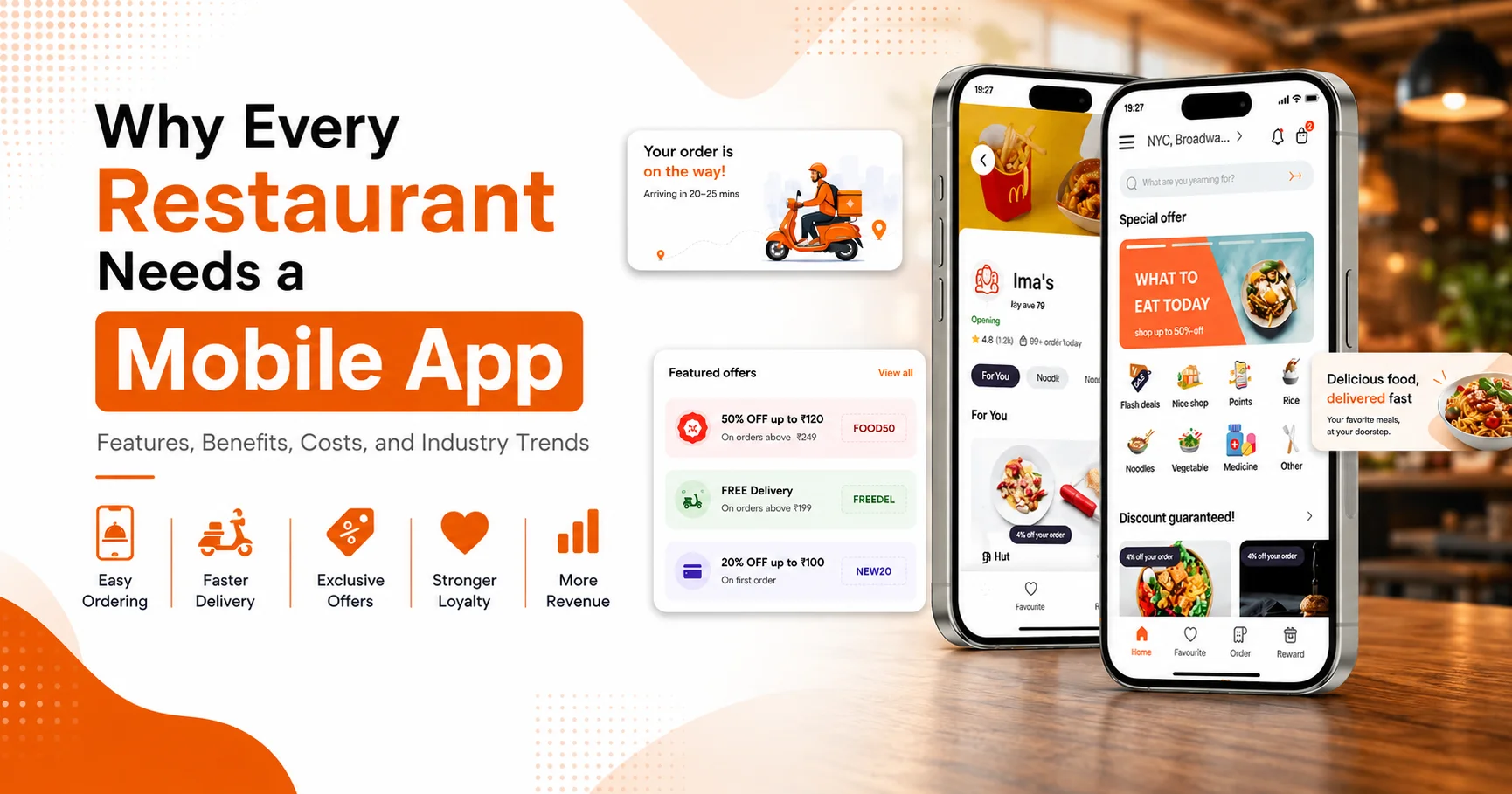
A restaurant mobile app is much more than a digital menu. It acts as a direct communication channel between your business and your customers, helping you strengthen relationships and increase profitability.
1. Increase Restaurant Attendance
Mobile apps provide an effective platform for promoting special events, seasonal offers, discounts, new menu items, and exclusive promotions.
Instead of relying solely on social media algorithms or email marketing, restaurants can communicate directly with customers through push notifications and in-app announcements.
This helps drive more foot traffic and encourages repeat visits.
2. Simplify Ordering and Payment
Customers value convenience.
A mobile app allows users to:
- Browse the menu
- Customize orders
- Place orders instantly
- Make secure payments
- Track order status
This creates a faster and more enjoyable experience compared to making phone calls or waiting in queues.
3. Improve Customer Loyalty
Loyal customers are the foundation of a successful restaurant business.
A mobile app makes it easier to:
- Reward repeat customers
- Offer exclusive discounts
- Provide personalized promotions
- Create membership programs
- Encourage engagement through rewards
The more value customers receive, the more likely they are to return.
4. Collect Valuable Customer Insights
Every interaction inside the app generates useful data.
Restaurant owners can analyze:
- Popular dishes
- Ordering frequency
- Customer preferences
- Spending habits
- Peak ordering times
This information helps businesses make smarter decisions regarding menu optimization, promotions, and inventory management.
5. Generate More Customer Reviews
Online reviews significantly influence purchasing decisions.
After a customer visits your restaurant or receives an order, the app can automatically send a notification requesting feedback.
Positive reviews help strengthen your reputation, while constructive feedback provides opportunities for improvement.
6. Reduce Dependence on Third-Party Platforms
Third-party delivery services often charge substantial commission fees.
A dedicated restaurant app allows businesses to:
- Build direct customer relationships
- Avoid excessive commission costs
- Control customer data
- Increase profit margins
For many restaurants, this alone justifies the investment in app development.
11 Must-Have Restaurant Mobile App Features
To maximize customer engagement and business value, your restaurant app should include the following essential features.
1. Contact Information
Every restaurant app should make it easy for customers to contact the business.
Include:
- Phone number
- Email address
- Social media links
- Operating hours
- GPS navigation integration
With one tap, customers should be able to call the restaurant or get directions.
2. Photo Gallery
Visual content plays a major role in customer decision-making.
A photo gallery can showcase:
- Restaurant interiors
- Dining atmosphere
- Signature dishes
- Chef specials
- Events and celebrations
High-quality images help build trust and encourage visits.
3. Digital Menu
The menu is often the most frequently used section of a restaurant app.
Customers want to:
- Browse available dishes
- Compare prices
- View ingredients
- Check nutritional information
- Explore seasonal offerings
Unlike printed menus, digital menus can be updated instantly without additional costs.
Benefits for Restaurant Owners
Restaurant managers can:
- Update prices quickly
- Add new menu items
- Remove discontinued products
- Highlight best-selling dishes
- Track menu performance using analytics
This flexibility improves operational efficiency and customer satisfaction.
4. Table Reservations
Reservation functionality allows customers to book tables directly through the app.
Benefits include:
- Reduced phone calls
- Faster booking process
- Better customer experience
- Improved table management
Customers appreciate the convenience of selecting a preferred date and time without needing to contact staff.
5. Pre-Order Meals
Time is one of today's most valuable resources.
Pre-order functionality allows customers to place orders before arriving at the restaurant.
This feature is especially beneficial for:
- Office workers
- Busy professionals
- Students
- Travelers
Customers arrive knowing their meals are already being prepared.
6. Food Delivery Integration
Food delivery remains one of the strongest drivers of restaurant revenue growth.
A delivery feature allows customers to:
- Order from anywhere
- Schedule deliveries
- Track orders
- Make secure payments
This expands your customer base beyond those who physically visit the restaurant.
7. Loyalty Programs
Customer retention is significantly more cost-effective than customer acquisition.
An effective loyalty program may include:
- Reward points
- Cashback offers
- Birthday rewards
- Referral bonuses
- Tier-based memberships
- Free products after repeat purchases
Instead of carrying physical loyalty cards, customers can access rewards directly through the app.
8. Order History
Order history simplifies repeat purchases.
Customers can:
- View previous orders
- Reorder favorite meals
- Save preferred combinations
- Access receipts
This improves convenience and encourages repeat business.
9. Push Notifications
Push notifications remain one of the most effective marketing tools available.
Restaurants can use them to promote:
- New menu launches
- Flash sales
- Limited-time discounts
- Special events
- Loyalty rewards
- Holiday promotions
When used strategically, push notifications increase engagement and drive additional revenue.
10. Quick Reorder Functionality
Many customers repeatedly purchase the same meals.
A dedicated "Reorder" feature enables users to place their favorite order with a single tap.
This creates a frictionless customer experience and increases conversion rates.
11. Smart Table Management
Advanced restaurant apps can integrate with reservation systems to provide:
- Real-time table availability
- Waitlist management
- Seating optimization
- Automated booking confirmations
Digital reservation systems minimize human errors and improve operational efficiency.
Advanced Features for Modern Restaurant Apps
Restaurants looking to gain a competitive advantage should consider additional features such as:
AI-Powered Recommendations
Suggest menu items based on:
- Previous orders
- Customer preferences
- Seasonal trends
Mobile Wallet Integration
Support payment methods such as:
- Apple Pay
- Google Pay
- Digital wallets
- Contactless payments
Real-Time Order Tracking
Allow customers to monitor:
- Order preparation
- Delivery progress
- Estimated arrival times
Customer Support Chat
Provide instant assistance through:
- Live chat
- AI chatbots
- Automated FAQs
Social Media Integration
Enable customers to:
- Share experiences
- Post reviews
- Refer friends
- Participate in campaigns
How Much Does It Cost to Build a Restaurant Mobile Application?
The cost of developing a restaurant app varies depending on the scope, complexity, and technical requirements.
Several factors influence pricing.
1. Feature Set
The number of features directly impacts development costs.
Basic apps may include:
- Menu
- Contacts
- Reservations
Advanced apps may add:
- Delivery systems
- Loyalty programs
- Payment gateways
- Analytics dashboards
- AI recommendations
2. Platform Choice
Businesses can choose:
- iOS application
- Android application
Pros:
- Better performance
- Superior user experience
Cons:
- Higher development costs
Single codebase for both platforms.
Pros:
- Lower costs
- Faster development
Cons:
- Some performance limitations
3. UI/UX Design
A professionally designed interface increases customer satisfaction and retention.
Custom design work generally requires additional investment but delivers better results.
4. Development Team Location
Development costs vary significantly depending on:
- Agency location
- Team expertise
- Project complexity
Rates in North America and Western Europe are typically higher than in Asia, Eastern Europe, or Latin America.
5. Backend Infrastructure
Complex backend systems may be required for:
- User management
- Payment processing
- Loyalty programs
- Delivery logistics
- Analytics
The more sophisticated the backend, the higher the development cost.
6. Testing and Ongoing Maintenance
Post-launch costs include:
- Bug fixes
- Security updates
- Feature enhancements
- Operating system compatibility updates
Maintenance is an ongoing investment that ensures app reliability.
Estimated Restaurant App Development Costs
| App Type | Estimated Cost |
|---|---|
| Basic Restaurant App | $10,000 – $20,000 |
| Mid-Level Restaurant App | $20,000 – $40,000 |
| Advanced Restaurant App | $40,000 – $80,000+ |
| Enterprise Restaurant Platform | $80,000 – $200,000+ |
Actual costs will vary depending on your requirements, integrations, and customization needs.
Final Thoughts
The restaurant industry is becoming increasingly digital, and customer expectations continue to evolve. A mobile application is no longer just an optional marketing tool—it has become a strategic asset for restaurant businesses seeking growth and long-term success.
By offering convenient online ordering, table reservations, loyalty programs, personalized promotions, and seamless customer engagement, restaurant apps help businesses attract new customers while strengthening relationships with existing ones. These digital solutions not only enhance the customer experience but also improve operational efficiency and drive higher revenue.
Whether you run a local café, a quick-service restaurant, a fine-dining establishment, or a multi-location franchise, investing in a mobile app can provide a significant competitive advantage in today's market.
Partnering with an experienced restaurant app development company such as Softkingo can help businesses build feature-rich, scalable, and user-friendly mobile applications tailored to their unique requirements. As consumer demand for digital experiences continues to grow, restaurants that embrace mobile technology today will be better positioned for sustainable success tomorrow.
Was this article helpful?
Current mood: Okay

About the Author
Paramhans Singh
Paramhans Singh, CEO & Founder of Softkingo, drives innovation, inspires tech talent, and leads the creation of high-quality IT solutions that deliver impact worldwide.