
Key Takeaways
- Mobile applications now provide access to nearly every service,
- from shopping and food delivery to booking and online learning.
- Among these, quiz and educational apps have gained significant popularity,
- offering users an engaging way to test and expand their knowledge.
Mobile applications now provide access to nearly every service, from shopping and food delivery to booking and online learning. Among these, quiz and educational apps have gained significant popularity, offering users an engaging way to test and expand their knowledge.
Students are particularly drawn to these apps due to their interactive and competitive nature. During periods when traditional classroom learning was limited, quiz apps provided an effective alternative for continued education. They continue to serve as a valuable tool for knowledge enhancement, skill development, and friendly competition.
The mobile app ecosystem continues to grow rapidly, with global app downloads projected to exceed 300 billion. Gaming and educational apps make up a substantial portion of this engagement, highlighting the increasing demand for interactive learning experiences that combine fun with skill-building.
India has emerged as a leading market, with over 650 million mobile gamers and a strong interest in both educational and entertainment applications. Quiz apps are particularly well-suited to this environment, offering learners and educators an effective, scalable, and engaging solution.
By allowing users to assess their skills, track progress, and explore new topics, quiz apps deliver both educational value and entertainment. This guide provides an overview of how quiz apps work, their essential features, benefits, and key considerations for development, offering a clear understanding of this rapidly growing sector.
Why Are Quiz Apps So Popular?
Quiz apps have gained widespread popularity because they combine learning, engagement, and challenge in a simple and interactive format. They spark curiosity and help users enhance their mental abilities by encouraging critical thinking and quick decision-making. Typically, users are presented with a series of questions that must be answered within a set time, adding a dynamic and competitive element to the experience.
In educational settings, teachers increasingly use quiz apps to assess students’ understanding, identify knowledge gaps, and track progress. The competitive nature of quizzes motivates students to perform better, making learning more interactive and enjoyable.
Beyond education, organizations also leverage quiz apps as a tool to evaluate candidates’ foundational knowledge during recruitment, helping streamline the hiring process.
Overall, quiz apps are popular because they offer a versatile platform for learning, self-assessment, and engagement, appealing to both students and professionals alike.
Benefits of Online Quiz Applications
- Accommodates a Large Number of Participants
Online quiz applications make it possible to conduct quizzes for a large audience spread across different locations. This eliminates geographical barriers and allows organizers to manage participants easily. Additionally, moving the quiz online reduces administrative costs associated with paper, pens, and hiring invigilators. - Can Be Taken Without an Instructor
Since the quiz is fully virtual, participants can complete it on their own schedule without the need for a proctor. This flexibility benefits both students and employees, allowing them to engage with the quiz independently. - Easy Record Management and Retrieval
All participant data and quiz results are stored digitally, making it simple to access, search, and analyze performance. There is no need for physical storage or manual tracking, streamlining the management process. - Randomized Questions for Fair Assessment
Online quizzes can draw questions randomly from a pre-created question bank, ensuring each participant receives a unique set of questions. This is much more efficient and manageable compared to offline quizzes, where generating random questions manually can be time-consuming and error-prone.
Tips for Building a Successful Quiz Mobile App
- Simple and Intuitive Interface
Focus on a clean and user-friendly UI/UX. Since quiz apps primarily involve question-and-answer interactions, there’s no need for complex graphics. Keep the design simple and intuitive, while optionally adding visual elements for live quizzes to enhance engagement. - Low Latency and Fast Performance
Ensure the app responds quickly to user actions. Low latency is critical for a smooth experience, particularly in competitive quizzes where timing matters. - Regular Updates and Fresh Content
Keep the app updated with new quizzes, features, and improvements. Regular updates help retain user interest and encourage continued engagement. - Choose the Right App Development Partner
Select an experienced app development company with a proven portfolio. Review their past projects and expertise to ensure they can deliver a reliable, high-quality quiz app that meets your requirements.
Types of Quiz Apps
- Educational Quiz Apps
Educational quiz apps have gained significant popularity, especially in schools and institutions. They allow educators to track students’ progress and assess the knowledge they have acquired over time. These apps proved particularly valuable during periods when traditional classroom learning was disrupted. - E-Learning Quiz Apps
E-learning quiz apps combine learning materials with interactive quizzes across various subjects. Users can attempt questions, assess their knowledge, and progress through different levels or modules to achieve specific learning goals. - Sports Quiz Apps
Sports quiz apps cater to fans of cricket, football, hockey, and other sports. They provide questions related to players, teams, tournaments, and general sports trivia, offering an engaging experience for sports enthusiasts. - General Knowledge Quiz Apps
These apps are popular among individuals preparing for competitive exams or those who enjoy testing their general knowledge. They often include sections on topics like English, history, current affairs, and general knowledge, helping users stay informed and improve their skills. - Interview Preparation Quiz Apps
Certain industries and companies use quiz apps as a tool to evaluate candidates’ basic knowledge and skills during the recruitment process. These apps help users prepare for interviews and improve their chances of selection.
Popular Quiz Apps in the Market
Some of the leading quiz apps with a large user base include:
- Live.me
- HQ Trivia
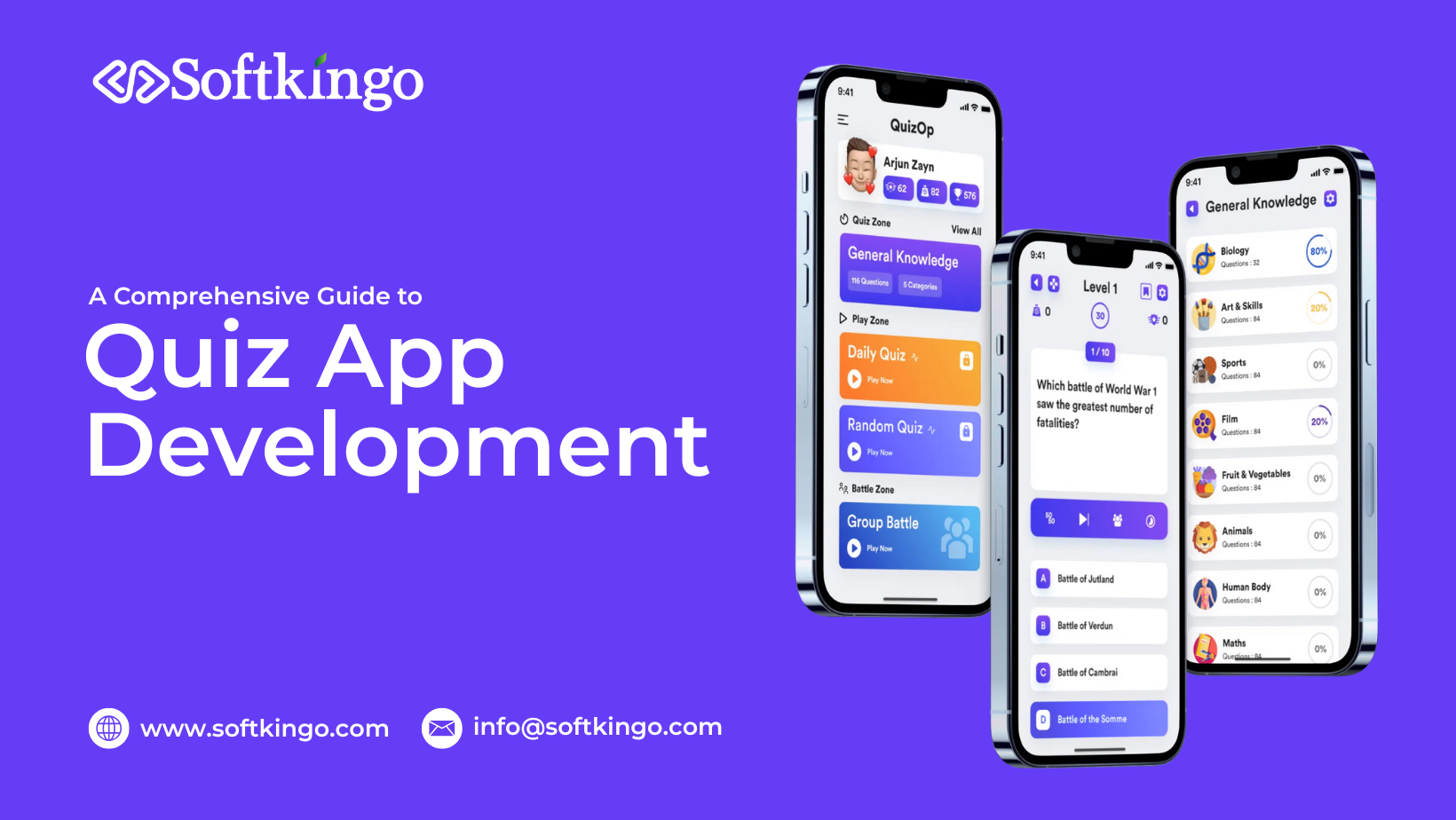
- QuizUp
- Loco
Before starting your own quiz app development project, it’s important to study these platforms. Analyzing their features, user interface, and engagement strategies can help you identify opportunities and design an app that stands out in a competitive market.
Complete Features of a Quiz App
1. User Management
- Signup / Sign-in: Easy registration via email, phone number, or social media accounts (Google, Facebook, etc.).
- Profile Management: Users can manage their personal information, profile picture, and preferences.
- User Levels / Ranks: Display user ranking based on quiz performance to encourage competition.
2. Quiz Management
- Topic Selection: Users can choose from various subjects or categories of interest.
- Question Bank: Store a large set of questions with options for multiple-choice, true/false, or descriptive answers.
- Difficulty Levels: Categorize quizzes into beginner, intermediate, and advanced levels.
- Timed Quizzes: Set timers for each question or the entire quiz to make it challenging.
- Randomized Questions: Automatically select questions randomly from the question bank to ensure uniqueness for each attempt.
3. Engagement and Gamification
- Daily Challenges / Tasks: Offer daily quizzes or challenges to keep users engaged.
- Reward System: Provide points, badges, or virtual coins for completing quizzes or achieving milestones.
- Leaderboards: Show top performers in global, regional, or friends’ leaderboards.
- Achievements / Badges: Unlock badges for completing levels, streaks, or special challenges.
4. Accessibility and Personalization
- Language Selection: Support multiple languages to reach a wider audience.
- Custom Quiz Creation: Allow users or administrators to create their own quizzes.
- Adaptive Learning: Suggest quizzes based on user performance and weak areas.
5. Social and Interactive Features
- Social Media Sharing: Share results, achievements, and challenge friends on social platforms.
- Multiplayer / Live Quiz Mode: Host real-time quizzes where users can compete with others globally.
- Discussion / Comment Sections: Enable users to discuss questions or share tips.
6. Notifications and Updates
- Push Notifications: Inform users about new quizzes, challenges, and rewards.
- Reminders: Notify users to complete daily quizzes or upcoming live events.
- Regular Updates: Continuously add new questions, features, and bug fixes to maintain engagement.
7. Analytics and Tracking
- Progress Tracking: Allow users to monitor their quiz performance over time.
- Performance Reports: Show detailed stats such as accuracy, time taken, and weak topics.
- Admin Dashboard: Provides analytics to app owners for monitoring user activity, quiz performance, and engagement metrics.
8. Security and Payment Features
- Data Security: Protect user data with encryption and secure authentication.
- Subscription / In-App Purchases: Offer premium content, ad-free experience, or advanced features through payments.
- Ad Integration: Support monetization via in-app advertisements.
9. Technical Features
- Low Latency & Fast Response: Ensure smooth and quick interactions, especially in live quiz modes.
- Offline Mode: Enable users to attempt quizzes without an internet connection (optional).
- Cross-Platform Compatibility: Available for both Android and iOS devices.
How Does a Quiz App Make Profit?
The ultimate goal of developing any mobile app is to generate revenue, and quiz apps are no exception. Choosing the right monetization strategy is critical to ensure maximum return on investment (ROI).
The most common way quiz apps earn money is through in-app advertisements. This allows app owners to display third-party products or services within the app and earn revenue based on impressions, clicks, or conversions.
Other monetization strategies include:
- Partnerships and Collaborations: Collaborating with educational institutes, coaching centers, or online learning platforms can provide sponsored content or co-branded quizzes.
- Promotional Ads: Running sponsored quizzes or promotions for brands within the app can also be a source of income.
- Premium Features: Offering ad-free experiences, additional question packs, or exclusive content for a subscription fee or one-time purchase.
With the right combination of these strategies, quiz apps can create a sustainable revenue model while providing engaging content for users.
How Much Does It Cost to Build a Quiz App?
The cost of developing a quiz app depends on multiple factors, and a reliable mobile app development company can provide accurate estimates only after understanding your requirements. The main factors influencing the cost include:
- Platform: Whether the app will be launched on Android, iOS, or both.
- Features and Functionalities: The number of features, complexity, and type of quiz (educational, competitive, live quizzes, etc.).
- App Complexity: A simple quiz app will cost less than a complex app with advanced analytics, multiplayer modes, and gamification.
- UI/UX Design: Custom and interactive designs increase development costs.
- Development Location and Team Size: Hourly rates vary based on the geographical location of the development team.
Considering these factors, the approximate cost to develop a quiz app ranges from $10,000 to $30,000. The final cost will depend on your specific requirements, design choices, and additional functionalities.
Conclusion
Quiz apps continue to gain momentum as powerful tools for learning, engagement, and user retention across industries. Their versatility and growing demand make them a smart investment for businesses aiming to expand their digital presence.
At Softkingo, we specialize in delivering custom quiz app solutions that combine intuitive design, scalable architecture, and effective monetization strategies. Whether you’re a startup exploring new opportunities or an established business looking to enhance user engagement, our experienced team is equipped to turn your idea into a high-performing quiz application.
Partner with Softkingo to build a quiz app that stands out, delivers value, and drives long-term success.
FAQ
Was this article helpful?
Current mood: Okay

About the Author
Paramhans Singh
Paramhans Singh, CEO & Founder of Softkingo, drives innovation, inspires tech talent, and leads the creation of high-quality IT solutions that deliver impact worldwide.