
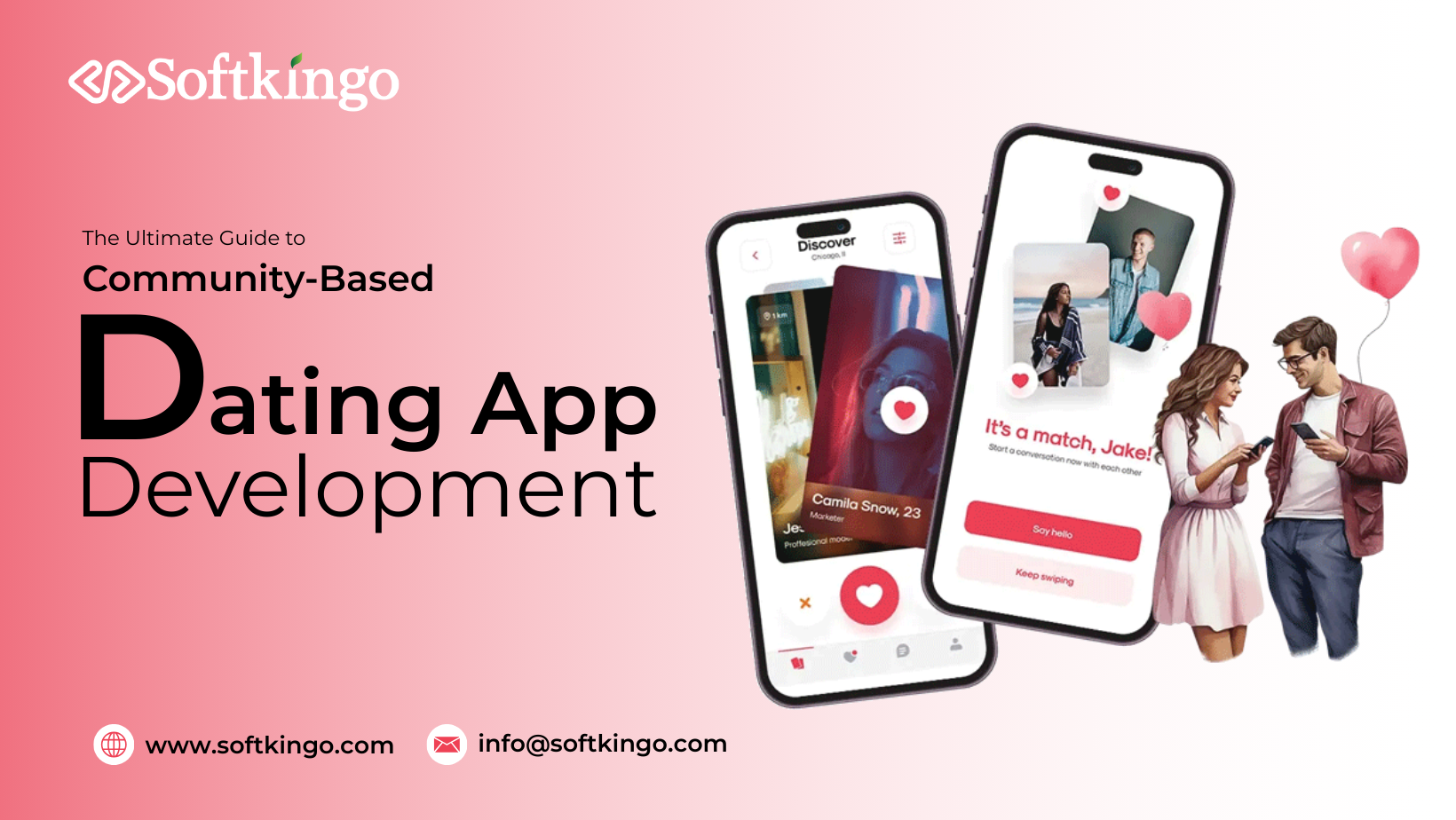
Creating a community-focused dating app takes more than just an idea—it demands creativity, smart design, a smooth user experience, and reliable functionality. From understanding your target audience to building an effective matchmaking algorithm, every step requires thoughtful planning. Features like user profiles, location-based matching, messaging, and strong security tools are essential for creating a safe, enjoyable, and user-friendly platform.
If you can design and launch a dating app that delivers all of this seamlessly, you’ll be well-positioned to stand out in today’s highly competitive market.
In this blog, we’ll break down the key elements of community dating app development—including the development timeline, must-have features, estimated costs, and the best strategies to monetize your app.
Global Market Overview: The Rise of Dating Applications
The dating app market has exploded over the past decade, fueled by widespread smartphone adoption, shifting social norms, and the convenience of digital dating.
Here’s a snapshot of the current landscape and what the future holds:
- The global online dating industry is set for major expansion, projected to reach $23.80 million by 2032, with a 9.2% CAGR from 2022 to 2033.
- Around 53 million Americans and 413 million people worldwide actively use dating apps and websites. With internet access and smartphone usage continuing to rise—especially in developing regions—these numbers are expected to grow even further.
How Gen Z and Millennials Use Dating Apps
If you’re building a dating app, Gen Z and Millennials should be at the center of your audience strategy. These generations make up the majority of dating app users and have shaped what modern online dating looks like.
Gen Z, having grown up fully immersed in technology, approaches dating very differently from Millennials. They tend to value speed, visual appeal, and authenticity. But their use of dating apps goes beyond looking for romantic partners. Many use these platforms to explore their identities, make new friends, and find communities that share their interests.
Features like video chat are becoming increasingly popular, letting users connect face-to-face before ever meeting in person. Social elements—such as group chats, activity feeds, and interest-based communities—are also in high demand, as younger users prefer dating experiences that feel more social and less transactional.
At the same time, both Millennials and Gen Z are drawn to apps that help them form deeper, more meaningful connections. They appreciate detailed profiles, compatibility-based matching, and messaging tools that encourage real conversation. Safety is also a major priority: identity verification, background checks, and customizable privacy settings are essential for earning their trust.
What Are Community-Based Dating Apps?
People naturally enjoy belonging to communities—whether those groups are built around culture, hobbies, or shared lifestyles. And today, communities aren’t limited to ethnicity or geography. New groups form constantly: pet lovers, vegans, fitness enthusiasts, gamers, tech fans, and so many more.
Community-based dating apps focus on connecting people with similar interests, values, and lifestyles, making matchmaking more meaningful and relevant.
For example, DateMyPet caters specifically to pet owners who want to meet others who feel the same way about animals. This helps eliminate common deal-breakers—after all, many relationships struggle because partners disagree on lifestyle choices or dislikes.
You can build niche dating platforms for virtually any community. If you deliver a satisfying experience, users tend to become loyal very quickly. Veggie, a dating app designed for the vegan community, is a great example—it has a strong user base and generates impressive revenue by catering to a very focused audience.
Must-Have Features for Community-Driven Dating Apps
While standard components like onboarding, profile creation, and push notifications are essential, community-centered apps benefit greatly from advanced features that enhance personalization, trust, and engagement. Here are some powerful additions that can elevate your platform:
1. AI-Based Chat
An AI-powered chat can help users break the ice with smart conversation starters, making the first interaction smoother and more confident. This feature sets your app apart by supporting users in starting meaningful conversations from the beginning.
2. Match Percentage
A compatibility system helps users understand how well they might connect with someone before reaching out. By offering questionnaires covering interests, values, and lifestyle habits, your app can calculate a match percentage that makes the experience more personalized and insightful.
3. Facial Recognition
Some users look for specific physical traits that remind them of a favorite celebrity or personality type. Facial recognition can help match users with people who resemble the look or vibe they’re drawn to, improving satisfaction and match relevance.
4. Gamification
Gamified elements can significantly boost user engagement. You might offer fun quizzes, scenario-based challenges, or interactive games that help people learn about each other in a playful way. These activities make the app feel more dynamic and enjoyable rather than purely transactional.
5. Face Verification
Trust is crucial in online dating. A face verification system—where users move their face in front of the camera to confirm identity—helps ensure that photos are authentic. Verified profiles give users peace of mind and increase the platform’s credibility.
6. Meetups Finder
Shared interests often flourish through real-world experiences. A meetup finder allows users to discover local events, gatherings, or activities right inside the app. You can even integrate ticket booking to make it more convenient and increase user engagement.
7. AI-Based Video Chats
For users who prefer face-to-face interaction, AI-powered video calls can enhance safety and comfort. AI can detect inappropriate behavior, issue warnings, or automatically end the call—helping maintain a respectful environment.
8. Undo Likes and Dislikes
It’s easy to swipe or tap the wrong way. An "undo" feature lets users reverse accidental likes or dislikes, reducing frustration and improving overall experience. Little convenience features like this often make a big difference in user satisfaction.
Factors to Consider Before Developing a Dating App
Building a community-focused dating app is a complex process, and success depends on careful planning long before development begins. To create a platform that users trust and enjoy, you need to evaluate several key factors. Here are some of the most important considerations:
1. Security
Whether your app is simple or feature-rich, security should always be a top priority. Dating apps require users to share personal details, making them a potential target for breaches. It’s your responsibility to ensure this information remains safe.
This means implementing robust measures such as profile verification, encrypted messaging, secure data storage, and protections against unauthorized access. A secure platform earns trust—and trust is essential in online dating.
2. Legal Requirements
Dating apps, especially those serving specific communities like the LGBTQ+ audience, must comply with local and international laws. Failure to follow regulations can lead to serious issues, from legal penalties to damage to your brand reputation.
Consulting a legal expert early in the process ensures your app adheres to privacy laws, content guidelines, age restrictions, and community safety standards.
3. Market Research
You can’t start development without understanding the market you’re entering. Conducting thorough research helps you identify global trends, assess growth potential, and learn what users expect from modern dating apps.
Study existing platforms, analyze their strengths and limitations, and explore opportunities for innovation. This will help you build an app that stands out.
4. Competitor Analysis
Knowing your competitors is just as important as knowing your users. Ask yourself:
- Who are the major players in your niche?
- What features do they offer?
- What do users love about them?
- Where do they fall short?
A strong competitor analysis gives you insights that can shape your strategy, helping you develop unique features and deliver a better overall experience.
5. Identify Your Target Audience
Understanding your audience is the foundation of a successful dating app. Determine who you want to reach and what matters most to them.
Ask questions like:
- What are their interests and habits?
- What problems are they trying to solve?
- What do they expect from a dating platform?
Once you clearly define your audience, you can design features, visuals, and user flows that resonate with them and address their specific needs.
Steps to Develop a Community Dating App
Building a community dating app is far from simple—it requires careful planning, design, and execution. Each step plays a crucial role in creating a successful and unique platform. Here’s a step-by-step guide to dating app development:
1. Define Your Target Audience
Understanding your audience is the first and most important step. Conduct detailed research on demographics such as age, gender, location, and income, as well as psychographics like interests, habits, and online behavior.
Knowing your target audience allows you to tailor features, design, and functionality to their preferences, boosting engagement. Surveys, focus groups, and market research can provide valuable insights, helping you build a product that resonates with users and encourages both downloads and regular usage.
2. Conduct Thorough Market Research
Analyzing competitors is key to understanding the market landscape. Identify top dating apps in your niche and study their features, user interfaces, pricing models, and marketing strategies.
Pay attention to user reviews to learn what people love—and dislike—about existing apps. This information allows you to identify gaps in the market, refine your strategy, and design a product that offers a superior experience and stands out from the competition.
3. Choose a Compelling App Name
Your app’s name is often the first impression users will have, so make it memorable and meaningful. A catchy, easy-to-remember name can help your app stand out in a crowded market while conveying its purpose and values.
It should be simple to spell and search for, align with your brand identity, and inspire trust. A strong name builds credibility and encourages word-of-mouth referrals, which are crucial in the dating app space.
4. Design a User-Friendly Interface
A great dating app balances aesthetics with usability. The visual design should reflect your brand personality with an appealing color scheme and inviting layout. Navigation must be intuitive, with clear instructions and smooth interactions.
Engaging elements like swipe gestures, personalized chat profiles, and interactive animations enhance the user experience. Focusing on interface design helps retain users, making your app more competitive in the saturated dating app market.
5. Integrate Core Features
Core features define the value of your app. Essential components include:
- User profiles with photos and personal info
- Matching algorithms to suggest potential partners
- In-app messaging for communication
Additional features such as video calls, voice messages, and social media integration increase user engagement. By building strong core functionality, your app can create meaningful connections and stand out in a crowded market.
6. Plan Your Monetization Strategy
Monetization is crucial for sustainability. Popular methods include:
- In-app purchases: Premium memberships, profile boosts, or virtual gifts
- Advertisements: Targeted ads that generate revenue per click or purchase
- Subscriptions: Tiered plans offering different access levels and perks
A thoughtful monetization strategy ensures your app remains profitable while providing value to users.
7. Prioritize Security
Safety is a top concern in dating apps. Implement strict verification to prevent fake accounts and protect user privacy. Secure payment gateways and data encryption are essential, as are features like reporting and blocking suspicious users.
Regular security audits and updates help prevent breaches and build trust with users, creating a safe environment for meaningful connections.
8. Test, Refine, and Launch
Thorough testing ensures your app performs smoothly. Conduct alpha and beta testing to identify bugs, usability issues, or design flaws. Collect feedback and refine the app accordingly.
A successful launch requires a strategic plan: marketing campaigns, influencer partnerships, and an appealing landing page to attract downloads. By systematically testing, refining, and promoting your app, you maximize its chance of success.
9. Market Your App Effectively
Marketing determines how widely your app is adopted. Understand your audience and craft messages that resonate. Leverage social media platforms like Instagram, Facebook, and TikTok, collaborate with influencers, and run targeted ads on Google and Facebook.
Offline promotions, partnerships, and events can also increase visibility. Continuous analysis and adjustment of marketing strategies help attract new users and grow an active community over time.
How Community Dating Apps Generate Revenue
For a dating app to thrive and grow, it’s essential to implement monetization strategies that complement the freemium model without compromising user experience. Here’s a breakdown of the most effective ways to make money through a community dating app:
1. In-App Purchases
One of the most popular approaches is offering a mix of free and premium features. Users can enjoy basic functionalities at no cost, while advanced features—like unlimited swipes, enhanced search filters, or special profile boosts—can be unlocked through in-app purchases. This not only increases engagement but also gives users a sense of progress and opportunity in finding their ideal match.
2. Advertisements
Displaying ads is a straightforward way to generate revenue. You can allow dating-related brands to promote their products or services directly within your app and charge them for ad placements. Additionally, affiliate marketing can be integrated, where your platform earns a commission whenever a user makes a purchase through the ad. This method works particularly well if your app has high traffic and active users.
3. Subscriptions
Subscription models remain a cornerstone of monetization in dating apps. Users pay a recurring fee—monthly, quarterly, or annually—to unlock premium perks like unlimited messaging, profile boosts, or seeing who viewed their profile. Apps like Tinder have successfully implemented this model with options like Tinder Plus and Tinder Gold, showing that users are willing to pay for tangible results and enhanced experiences.
Tech Stack for Building a Community Dating App
Creating a robust dating app requires a careful selection of technologies to ensure performance, scalability, and smooth user experience. Here’s a recommended tech stack:
- Frontend: React Native (for cross-platform dating development), Swift (iOS), Kotlin (Android).
- Backend: Node.js, Python (Django/Flask), Ruby on Rails.
- Database: PostgreSQL, MongoDB, Firebase.
- Cloud Services: AWS, Google Cloud, and Azure.
- Software: Jira (project management), GitLab/GitHub (version control), Slack (communication), along with Figma (design).
- Utilities: Google Analytics and Google Maps.
- Payment gateways: PayPal and Stripe
- Web Server: Nginx, Caddy, and Envoy.
- Machine Learning: Rapid AI and Amazon ML.
- Social Integrations: Facebook SDK, Twitter SDK, Instagram SDK, and many more.
- Push notification: Firebase
- Cloud Storage: Google Cloud, Amazon S3, and Azure.
- Geolocation: Google Location Services and W3C.
How Much Does It Cost to Develop a Community Dating App?
Building a community dating app is an exciting venture, but one of the first questions many entrepreneurs ask is: “How much will it cost?” The answer depends on several factors, including the complexity of your app, the features you want to include, and the platforms you plan to support.
For a basic community dating app with essential features like profiles, messaging, and simple matching algorithms, you can expect development costs to start around $20,000 to $30,000. This type of app provides a solid foundation and is ideal for testing your idea in the market.
If you want to include advanced features, such as AI-driven matchmaking, geolocation tracking, video calls, social media integration, or gamification elements, costs will naturally increase. A fully-featured app designed for both iOS and Android can range anywhere from $50,000 to $100,000.
Location also plays a significant role in pricing. Hiring developers in North America or Western Europe generally comes at a higher rate than working with talented teams in Eastern Europe or Asia, where hourly rates are more affordable.
Additional factors that influence cost include:
- High-end security features to protect sensitive user data and ensure safe in-app purchases or subscriptions
- Ongoing maintenance and updates to keep the app running smoothly
- Server costs and cloud storage to manage growing user data
For a robust, fully optimized community dating app, you may be looking at an investment between $100,000 and $200,000, depending on your goals and the level of sophistication you want to achieve.
Key Takeaways
Creating a top-quality dating app isn’t just about coding; it’s about building a safe, engaging, and user-friendly platform that people will want to return to. Success in this field requires:
- Careful design and intuitive UI/UX to make users feel comfortable and connected
- Cutting-edge technology to support advanced features and smooth performance
- Ongoing development and updates to keep the app relevant and secure
The dating app market is booming, and more users are turning to mobile platforms to find meaningful connections. While competition is fierce, the opportunities are immense for apps that deliver unique, valuable, and community-focused experiences.
If you have a dating app idea, the next step is to validate your concept and choose a reputable development partner who can bring your vision to life. At Softkingo, we specialize in creating enjoyable and effective dating apps, helping businesses succeed in this fast-growing market.
FAQ
Is developing a community dating app profitable?
Yes, developing a community dating app can be highly profitable when approached with the right strategy. The success of leading dating platforms proves there is strong market demand. Revenue can be generated through subscriptions, in-app purchases, advertisements, or a combination of these models. By creating a well-designed app that genuinely addresses users’ needs, you can establish a sustainable business in the competitive dating industry.
What is the cost of developing a community dating app?
The cost of building a community dating app depends largely on its complexity and the features you want to include. A basic app can cost between $20,000 and $30,000, while more advanced apps with rich features and custom design can exceed $100,000. Factors such as the choice of platforms (iOS, Android, or both), unique UI/UX design, and additional functionalities all influence the final price.
What features are essential in a community dating app?
To succeed, a dating app should offer core functionalities like user profile management, swiping to find matches, and in-app messaging. Other key features include:
- Geolocation services for finding nearby matches
- Advanced filters to refine search results
- Push notifications to keep users engaged
- Security measures to protect user data
- Video and voice calling for enhanced interaction
- Social media integration to streamline sign-ups and sharing
- Admin panel for efficient management and monitoring
Incorporating these features ensures your app is both functional and engaging.
How long does it take to develop a community dating app?
Development timelines depend on the app’s complexity and the features included. Typically, a basic dating app can be built in about three months, but more sophisticated apps may take longer. At Softkingo, we prioritize meeting deadlines while ensuring a high-quality product that aligns with your vision and user expectations.
Was this article helpful?
Current mood: Okay

About the Author
Paramhans Singh
Paramhans Singh, CEO & Founder of Softkingo, drives innovation, inspires tech talent, and leads the creation of high-quality IT solutions that deliver impact worldwide.